


In moments of change, your team looks to you—not for perfection, but for presence. When priorities shift or uncertainty takes hold, leadership becomes the anchor that steadies the work and the people doing it..
The most effective change leaders are those who understand how they think, how their teams think, and how to flex between different styles to build trust and move forward together.
What Leaders Need to Understand About Change Management
Before you can learn how to lead change management, you need to reframe how you think about change. It’s not just a process to manage; it’s a moment that reveals your mindset, values, and influence.
Here's what every leader must understand to build trust, align behavior, and lead with purpose when things are in flux.
Change Leadership Is Not the Same as Change Management
Change management is about planning and process. Change leadership is about energy, direction, and engagement. Both are critical.
Change Is About People, Not Just Plans
Every organizational shift ultimately depends on successfully getting peopel to change their behavior. People aren’t just checking boxes—they’re reacting, adjusting, deciding. Whole Brain® leaders consider how each team member thinks, and use that understanding to move people through uncertainty with clarity and care.
Leaders Are the Primary Influencers of Change Outcomes
Your consistency, visibility, and communication style shape how your team experiences change. Herrmann’s research shows that leaders who flex their thinking build more trust and get better results. What you do in uncertain moments sends louder signals than what you say in all-hands meetings.
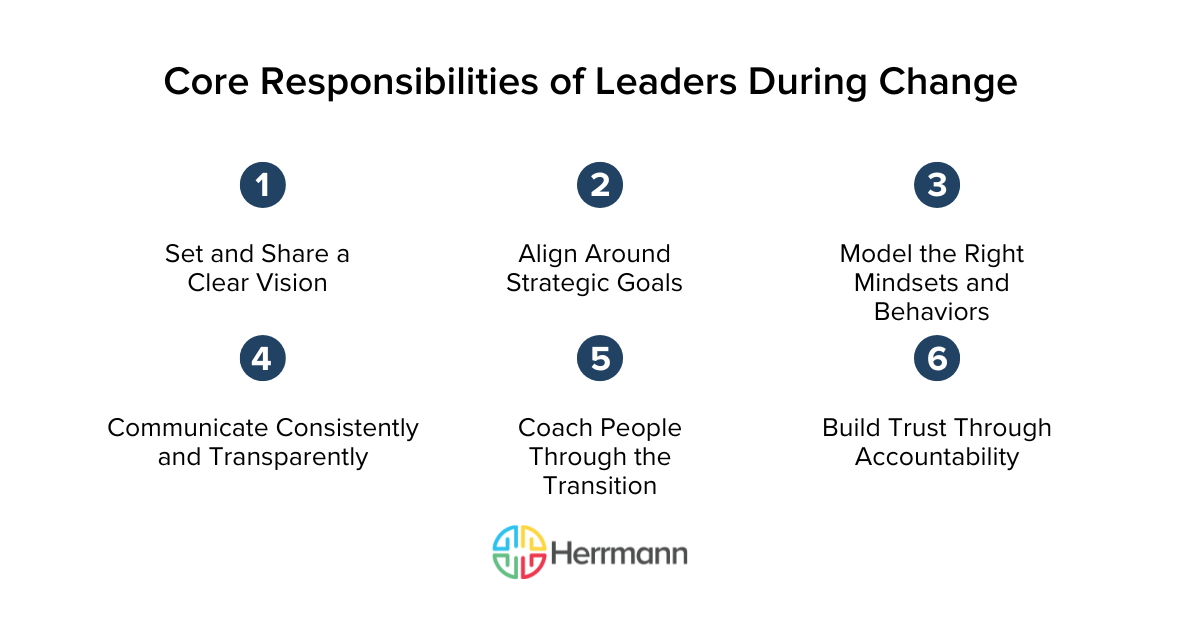
Core Responsibilities of Leaders During Change
Great change leadership combines effective communication, strategic planning, and people-first decision-making. Whether you're supporting a short-term project or a long-term transformation, these responsibilities represent core leadership practices. It’s how business leaders align short term wins with long-term goals and how team members stay engaged even as things evolve.
1. Set and Share a Clear Vision
People need to know where you’re going, why it matters, and what it means for them. Make your vision short enough to repeat, and strong enough to motivate.
2. Align Around Strategic Goals
Effective change management depends on connecting team efforts to strategic planning and broader business outcomes.
Connect the dots between the change and the organization’s bigger picture. Teams work better when they know their efforts contribute to real outcomes.
3. Model the Right Mindsets and Behaviors
To lead change effectively, you must also demonstrate effective leadership qualities that keep people aligned and resilient.
Change is caught, not just taught. If you remain calm, adaptive, and focused, your team is more likely to follow suit.
4. Communicate Consistently and Transparently
Use multiple communication channels to reach different learning styles and reinforce messaging.
Don’t wait until you have all the answers. Start communicating early. Repeat messages across different formats, and acknowledge what you don't yet know.
5. Coach People Through the Transition
This is a key leadership skill. Senior executives and frontline managers alike need to act as mentors during any management initiative.
Support looks different for everyone. Offer encouragement, reinforce progress, and listen for unspoken concerns.
6. Build Trust Through Accountability
When you build trust, you create a safe environment for learning and feedback. It also improves adoption of new management processes.
Do what you say. Address resistance without blame. Create space for feedback and opportunity for growth, and take action when people speak up. That’s how you become a trusted, effective leader during change, one who doesn’t just manage processes but earns buy-in that lasts.
Whole Brain® Thinking: Tools and Frameworks to Lead Change Effectively
Whole Brain® Thinking is Herrmann’s foundational approach to understanding and applying cognitive diversity. It helps leaders recognize that people process change in different ways, and that becoming a successful change manager means adapting across those styles.
Each quadrant of the Whole Brain® Model reflects a different thinking preference:
- A Quadrant (Analytical): Values data, logic, and objective analysis
- B Quadrant (Practical): Prefers structure, timelines, and step-by-step execution
- C Quadrant (Relational): Focuses on empathy, connection, and trust
- D Quadrant (Experimental): Seeks vision, possibilities, and creative solutions
Leaders who apply Whole Brain® Thinking can tailor their approach to reach everyone.
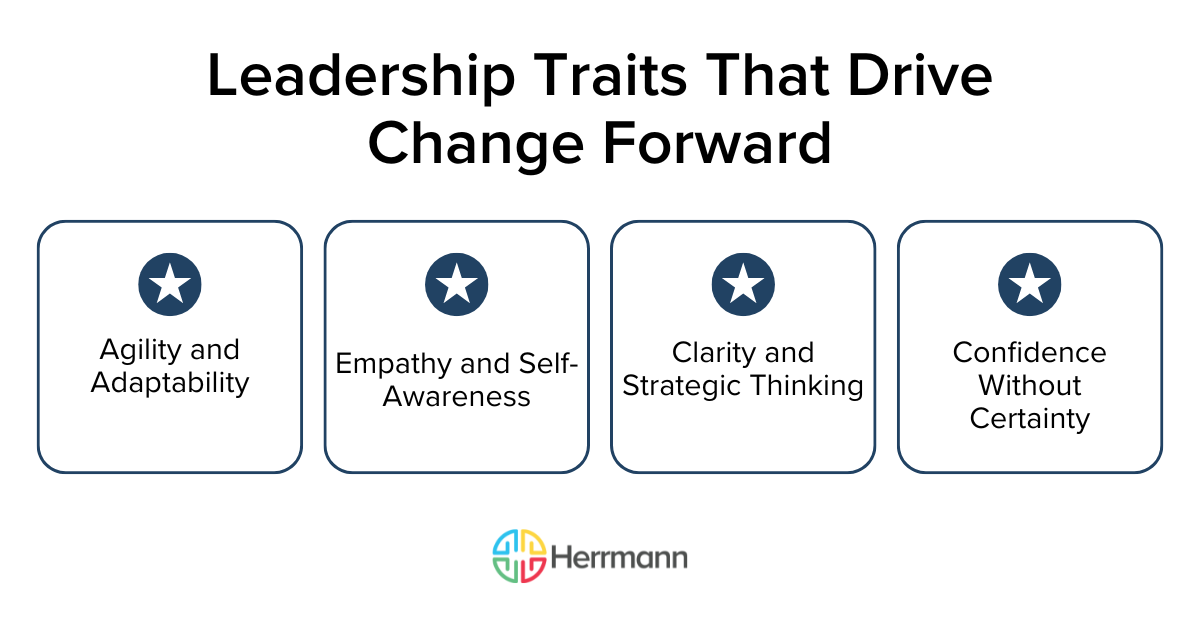
Leadership Traits That Drive Change Forward
Skills get things done. But traits shape how people experience you as a leader, especially in times of change. The qualities below make the difference between a leader who survives uncertainty and one who earns trust through it.
Agility and Adaptability
Change rarely goes according to plan. Effective leaders stay flexible, adjust quickly, and help others do the same without losing momentum.
Empathy and Self-Awareness
You can’t lead others through uncertainty if you’re unaware of how you’re experiencing it yourself. Strong leaders stay grounded, tuned in, and emotionally responsive.
Clarity and Strategic Thinking
When everything feels like a moving target, clarity is your most powerful tool. Keep the team focused on what matters most.
Confidence Without Certainty
When things are unclear, leaders don’t need all the answers, but they do need to keep others steady. Effective leaders acknowledge the unknown, focus on what they do know, and help the team stay grounded in shared goals.
Whole Brain® Change Management for Leaders
Whole Brain® Thinking helps leaders lead change more effectively by adapting to the diverse thinking styles on their team. It's not about changing who you are—it's about expanding how you think, communicate, and support others during uncertainty.
Our research shows that cognitively flexible leaders are better equipped to navigate complexity, build trust, and drive meaningful progress. When leaders understand their own thinking preferences and those of their team, they’re better positioned to reduce resistance, strengthen alignment, and lead with clarity and impact.
Want to lead more effectively through change? Take the HBDI® with your team.
Share