

.png?width=1200&name=Featured%20(1).png "two women sitting down and talking to each other, smiling.")
Workplace communication challenges are diagnosed by identifying gaps in cognitive preferences—how individuals process and express information. To overcome these barriers, organizations must leverage the Whole Brain® Thinking model to recognize diverse styles (Analytical, Practical, Relational, and Experimental), ensuring that internal communication is accurate, timely, and inclusive of all thinkers.
Every team invariably runs into communication issues. No matter the cause—different communication styles or simple misunderstandings—effective teams must diagnose and overcome these challenges to maintain productivity. According to research from Gallup, only 7% of U.S. workers feel strongly that their workplace’s communication is accurate and open. Effective communication requires you to understand root causes and leverage the different thinking preferences of your people.
4 Common Communication Challenges in the Workplace
Miscommunication is rarely a lack of effort; it is usually a mismatch in the way people think.
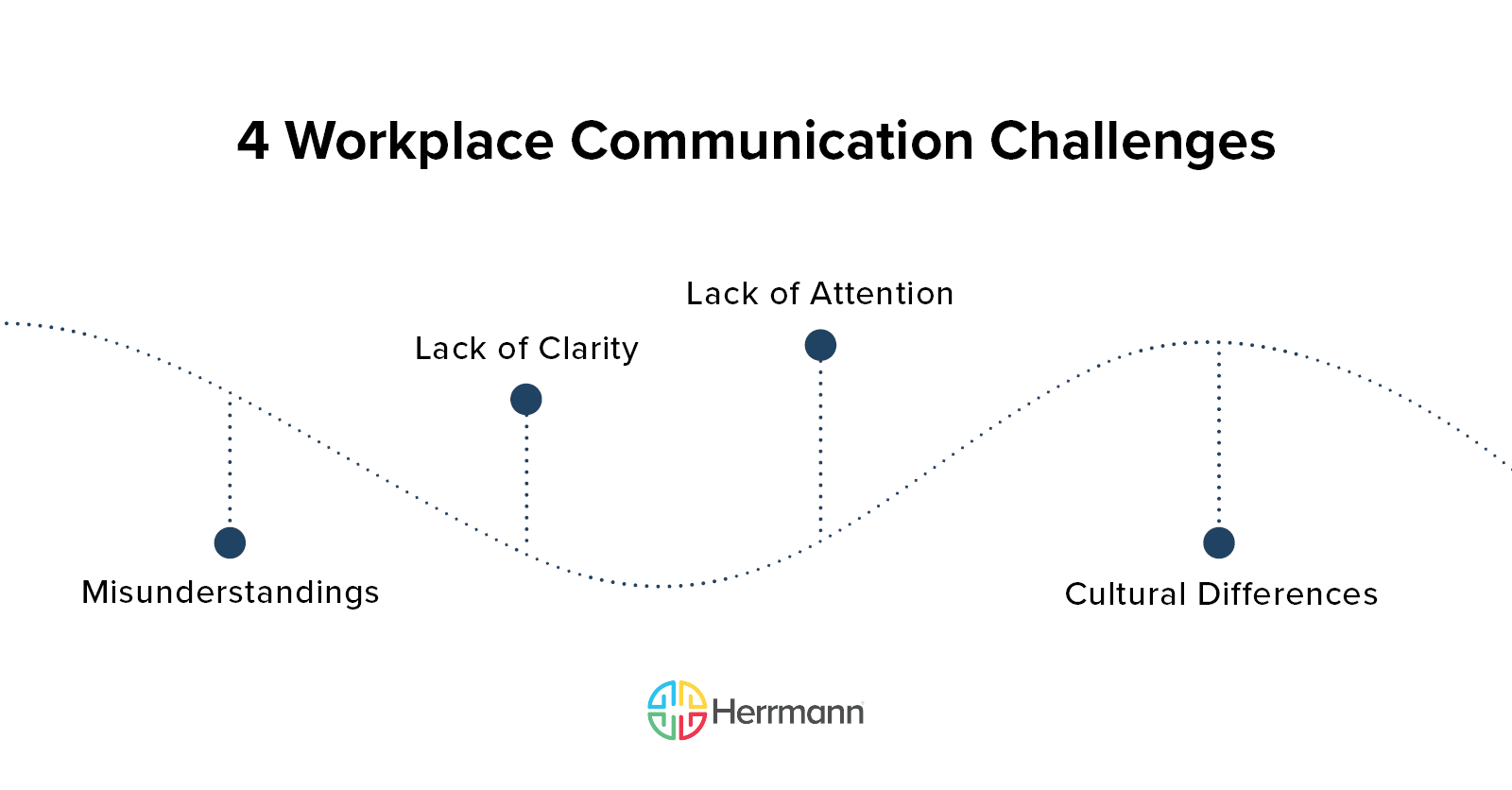
1. Persistent Misunderstandings: One of the primary reasons misunderstandings occur is because people have different assumptions and perspectives. This is often exacerbated by technical jargon or failing to recognize people’s different communication styles. If you prefer written notes (Structural) but a colleague prefers verbal brainstorming (Experimental), you will struggle to stay on the same page.
2. Lack of Clarity and Specificity: Confusion arises when teams aren’t clear about expectations. Missing details, insufficient information, or unclear goals make feedback difficult, affecting the quality of work and the team's ability to improve.
3. The Attention Gap: When people don’t pay attention, they miss pertinent details. At best, this leads to workflow loops; at worst, it can be catastrophic in high-risk environments. Lack of attention also complicates relationships, as trust cannot be built without active listening.
4. Cultural and Normative Differences: Your background influences what you consider "normal" or "polite." Some cultures or departments are more direct, while others emphasize nonverbal cues. Understanding these differences is essential for cross-functional collaboration.
7 Effective Tips for Overcoming Communication Challenges in the Workplace
Successful communication is a skill that can be learned and scaled across an organization using these seven strategic shifts.
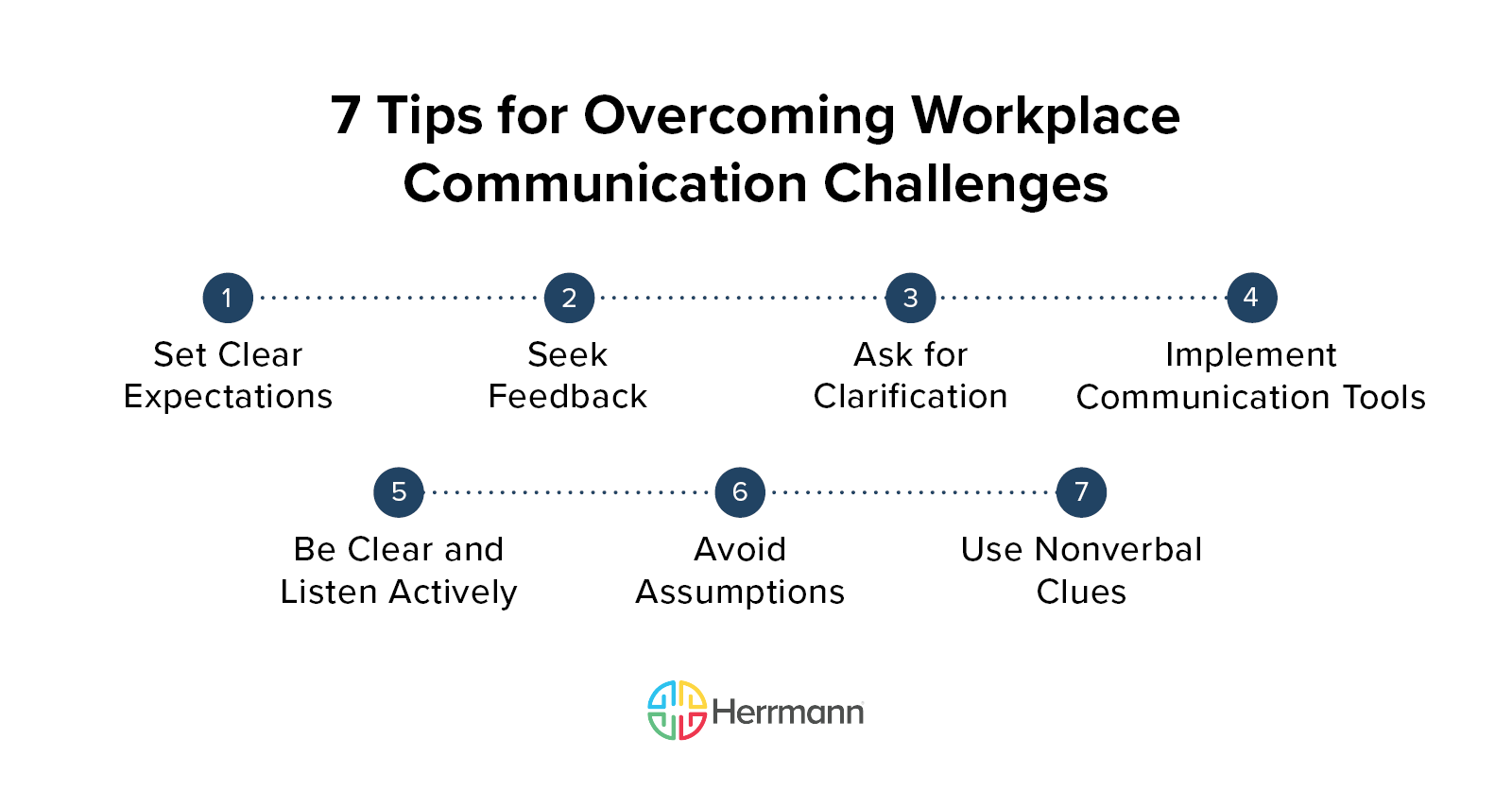
- Set Clear Expectations via Thinking Styles: When people know their roles and how their teammates think, they can focus on what they do best. Sharing Whole Brain® Thinking preferences creates a baseline of trust. The HBDI® (Herrmann Brain Dominance Instrument®) further decode this process, providing a validated profile of how individuals and teams approach problems and communicate.
- Seek Feedback and Address Concerns: Addressing concerns early prevents them from becoming larger issues. Use the Whole Brain® "Walk-around" method to ensure You are addressing the logical, structural, relational, and big-picture needs of the entire team.
- Ask for Clarification When Needed: Encourage a culture where questions and curiosity are valued over "pretending to know." Managers should watch for signs of confusion, such as reduced engagement or productivity, which often indicate a lack of cognitive alignment.
- Implement the Right Communication Tools: The right tools—from project management software for structure to video conferencing for connection—help resolve disagreements while honoring different thinking preferences. This is where HBDI® data becomes a high-value tool, allowing You to personalize Your communication style to match the "frequency" of Your audience.
- Practice Active Listening: Active listening is a key communication skill to combat poor engagement. Make an effort to listen by paying close attention, asking questions, and offering feedback to ensure the message is received as intended.
- Avoid Assumptions through Curiosity: Use the Whole Brain® Thinking model to grow beyond Your own cognitive "blind spots." Instead of assuming You have the answer, be a curious learner seeking the truth rather than a “knower” who does not inquire further.
- Monitor Nonverbal Cues: Body language and tone of voice can be just as important as words. Pay attention to Your cues and how they are interpreted, especially with Relational (Red) thinkers who are more attuned to expressive, interpersonal communication.
The Key to Successful Communication in the Workplace
Communication is an ongoing challenge, but it is the foundation of organizational success. When you address communication issues by empowering your people to understand how they think, you’ll see the results in improved workflows and business results.
Ready to communicate with every thinker?
Download Your Guide to Better Communication
Share